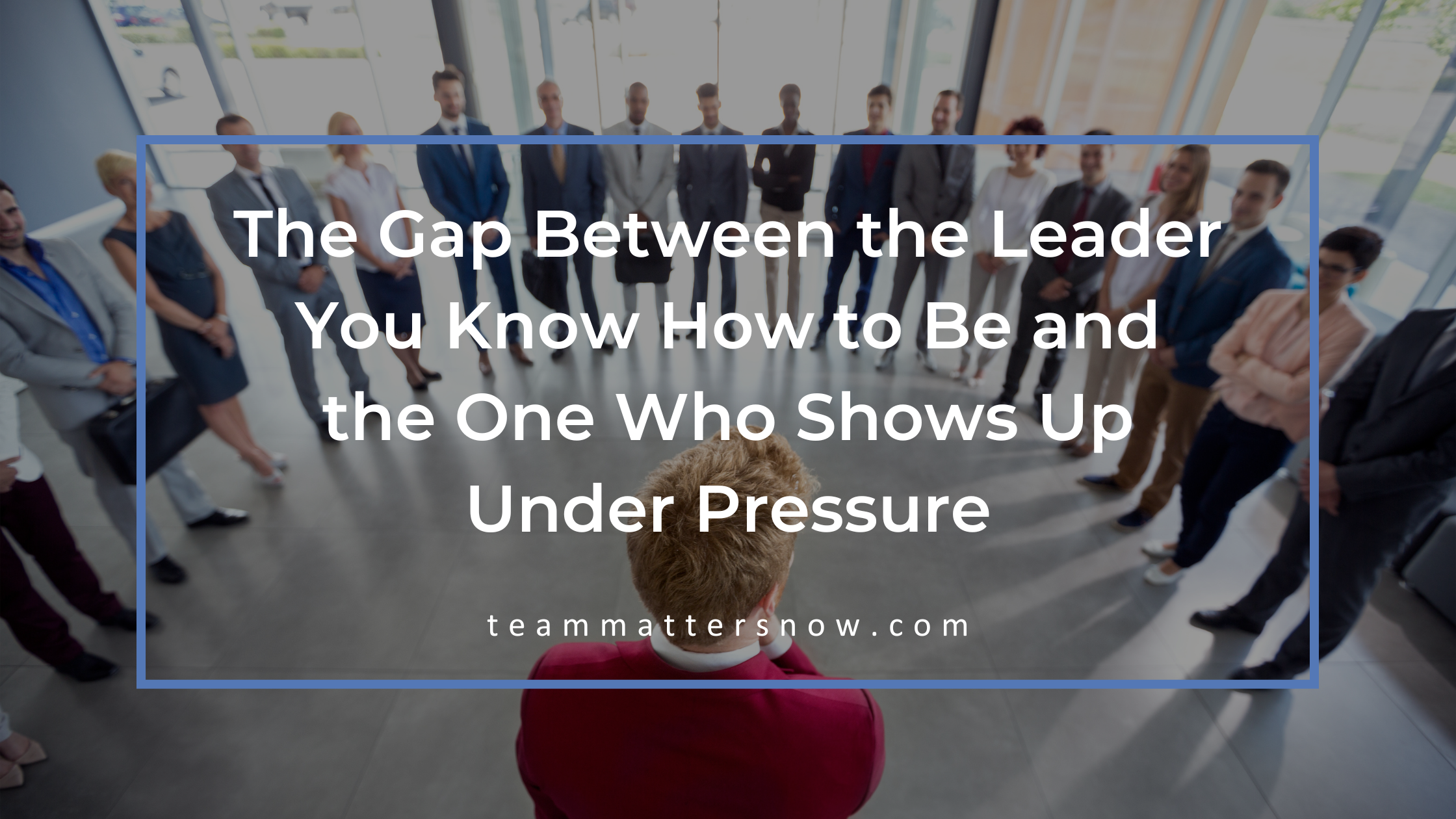
The Gap Between the Leader You Know How to Be and the One Who Shows Up Under Pressure
Most leaders we work with are not short on knowledge.
They’ve done the training. They’ve read the books. They know what good leadership looks like: the listening, the clarity, the presence, the ability to hold a team through difficulty without losing themselves in the process.
They know it. And yet.
And yet when the pressure is on, when the deadline is immovable, or the conversation is charged, or the team is fractured and looking to them to fix it, something else shows up instead.
The short answer. The closed-off posture. The decision made alone that should have been made together. The retreat into task when what was needed was connection.
We see this in almost every leader we work with. Not because they're failing. Because they're human.
And because there is a gap, a real, normal, almost universal gap between the leader we know how to be and the one who actually shows up when it matters most.
Why the Gap Exists
Understanding is not the same as practice. And practice under normal conditions is not the same as practice under pressure.
Think about it in any other domain. A musician who has practised scales for years can still freeze during a performance. An athlete who trains daily can still tighten up in the final minute of a close game. The skill is there. But something about the moment, the stakes, the visibility, the weight of it, reaches past the skill and touches something older.
Leadership under pressure works the same way.
When a team member pushes back unexpectedly. When a project starts to unravel. When we're tired, or under-resourced, or simply having a hard week. In those moments, the version of us that shows up is often not the one we've been working to build. It's the one we learned to be long before any leadership training.
It’s the one that learned to avoid conflict, or to push through it. To prove itself, or to disappear. To control, or to defer. Whatever pattern was laid down early, in families, in early workplaces, in formative experiences of authority and belonging, that pattern has a habit of surfacing exactly when the stakes are highest.
The Moment We Notice
The good news, and there is real good news, is that the gap becomes a teacher the moment we notice it.
Not to judge ourselves. Not to spiral into shame about how we handled something. But to get curious.
What was actually happening for me in that moment? What was I afraid of? What was I protecting? What did I need that I wasn’t getting, and how did that need drive my behaviour?
Cathy remembers working with a leader who had a reputation for being brilliant in one-on-one conversations and almost unreachable in team settings. Short, transactional, disengaged. When they finally sat with it, what emerged was a fear of saying something wrong in front of the whole group. Of looking uncertain. Of the team losing confidence in them.
So they went away. Not in body, but in presence. They showed up physically and disappeared emotionally.
Once they could see that pattern really see it, without flinching everything changed. Not overnight. But incrementally, meeting by meeting, moment by moment.
The gap didn't disappear. But it stopped running the show.
What Closing the Gap Actually Looks Like
We want to be honest about something: there is no technique that closes this gap permanently. No framework that removes the human complexity of leading people through difficulty.
What there is, what actually works is practice. Ongoing, honest, sometimes uncomfortable practice.
It looks like: noticing, in real time, when you’ve moved away from the leader you want to be. Not hours later. Not in the retrospective. In the moment, or as close to it as you can get.
It looks like: building small rituals of reflection. Not elaborate journalling practices (though those work for some people). Just pausing after a hard conversation to ask: how did I show up? Was that who I wanted to be? If not, what was happening for me?
It looks like: creating relationships with people who will tell you the truth. A peer, a mentor, a coach. Someone who isn’t invested in your performance looking good, but in you actually growing.
And it looks like: extending yourself the same grace you’d extend to anyone on your team who was honestly trying.
Because the leaders who close the gap slowly, imperfectly, over time — are not the ones who are hardest on themselves. They're the ones who are most honest with themselves. And most committed to the practice.
A Good Place to Start: What Kind of Leader Are You?
One of the most useful things you can do right now is start to name the pattern.
Not to judge it. Not to fix it overnight. Just to see it more clearly. Because when you can see it, you can start to work with it.
We created a short quiz to help you do exactly that. It takes about five minutes and gives you a picture of your leadership style and what it means for the team you lead. Not a label. A lens.
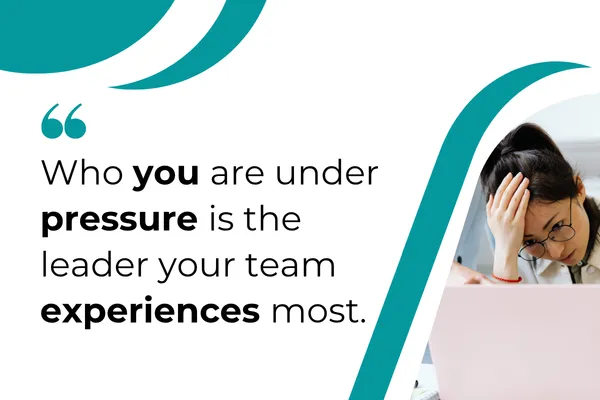
What you learn about yourself matters. But so does what it means for the people around you. The way you tend to lead under pressure shapes the experience your team has of being led. That’s worth knowing.
Take the quiz here: https://link.tekmatix.com/widget/quiz/89ZVAWDXnX8eoYoCeECA
And if you want to keep going from there, we have a few other free resources waiting for you: a daily leadership practice worksheet, an accidental leader checklist, and more. All designed to support exactly the kind of honest, practical reflection we’ve been talking about here.
Access the free resources here: https://teammattersnow.com/free-resources
Come as you are. The gap is where the learning lives.