The Team That Went Quiet

Some of the most worrying team meetings I've sat in were the quietest ones.
Everyone nodding. Nobody pushing back. The leader walking out thinking it went well.
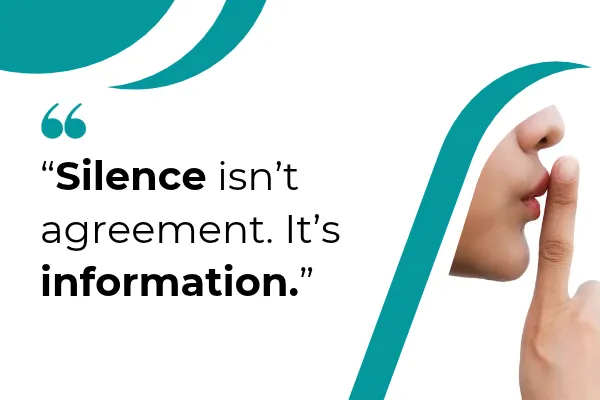
I've seen this pattern often enough now that I don't read silence as agreement anymore. I read it as information, and
it's usually telling me something the team can't say out loud.
What I used to think quiet meant
Early on, I took a quiet room at face value. No objections meant the plan was solid. No questions meant the message
was clear. A team that rarely disagreed looked like a team that was aligned.
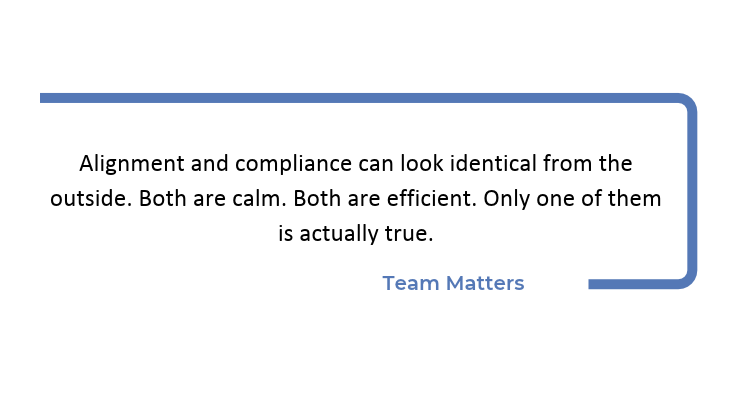
It took me longer than I'd like to admit to see that alignment and compliance can look identical from the outside.
Both are calm. Both are efficient. Only one of them is actually true.
What the quiet was actually saying
When a team goes quiet, people haven't run out of things to say. They've decided, usually without anyone
announcing it, that saying them costs too much.
Maybe someone raised a concern once and watched it get brushed aside. Maybe the leader's face tightened when the
answer wasn't what they hoped for. Maybe the team simply learned that this leader needs to look certain, and that
uncertainty, theirs or anyone's, isn't welcome in the room.
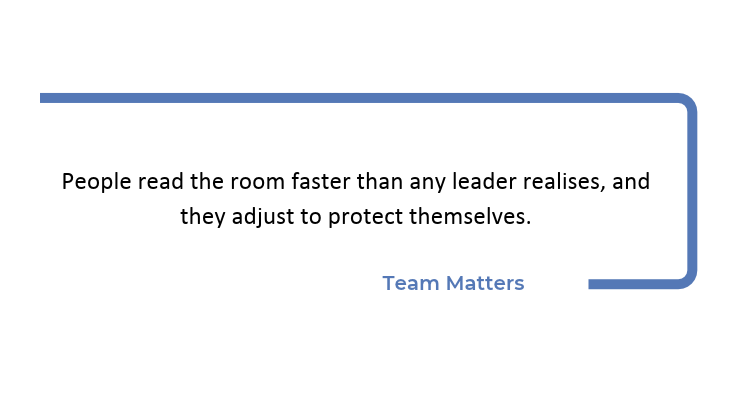
None of that is usually intentional. The leader isn't trying to silence anyone. But people read the room faster than any leader realises, and they adjust to protect themselves.
What the leader actually needs
When I sit with leaders in this situation, they often ask for a technique. A better way to run meetings. A set of questions that draws people out. A rule about everyone speaking once.
Those can help at the edges. But they don't reach the real issue, which is rarely about the meeting. It's about what the leader needs from the room: to be seen as capable, to stay in control, to avoid hearing something that unsettles the picture they've built of themselves.
Teams feel that need long before the leader can name it. And they respond to it by saying less.
What I want for the leaders who come to us
This is a big part of why the Foundation modules at Leading Teams Academy start with identity rather than technique. A leader who knows who they are, and isn't leaning on the team to confirm it, can hear a hard answer without flinching. And a team can tell.
I want the leaders who find us to build rooms where honesty feels survivable. Not because they've mastered a facilitation method, but because they've done the work that makes it safe for them to hear what's true.
One thing I know for sure
A quiet team is rarely a content team. More often it's a careful one.
The good news is that care can change direction. When a leader gets steadier about who they are, the room tends to loosen. People start saying the things they were holding back. Not all at once, and not always comfortably, but honestly.
If your team has gone quiet, don't assume it means things are fine. It might be the most useful thing they're telling you.
Not sure where to start? Take the What Kind of Team Leader Are You? quiz.
https://link.tekmatix.com/widget/quiz/89ZVAWDXnX8eoYoCeECA